
By Karen Cairone, Mary Mackrain, and Rudee Robertson | April 21, 2026
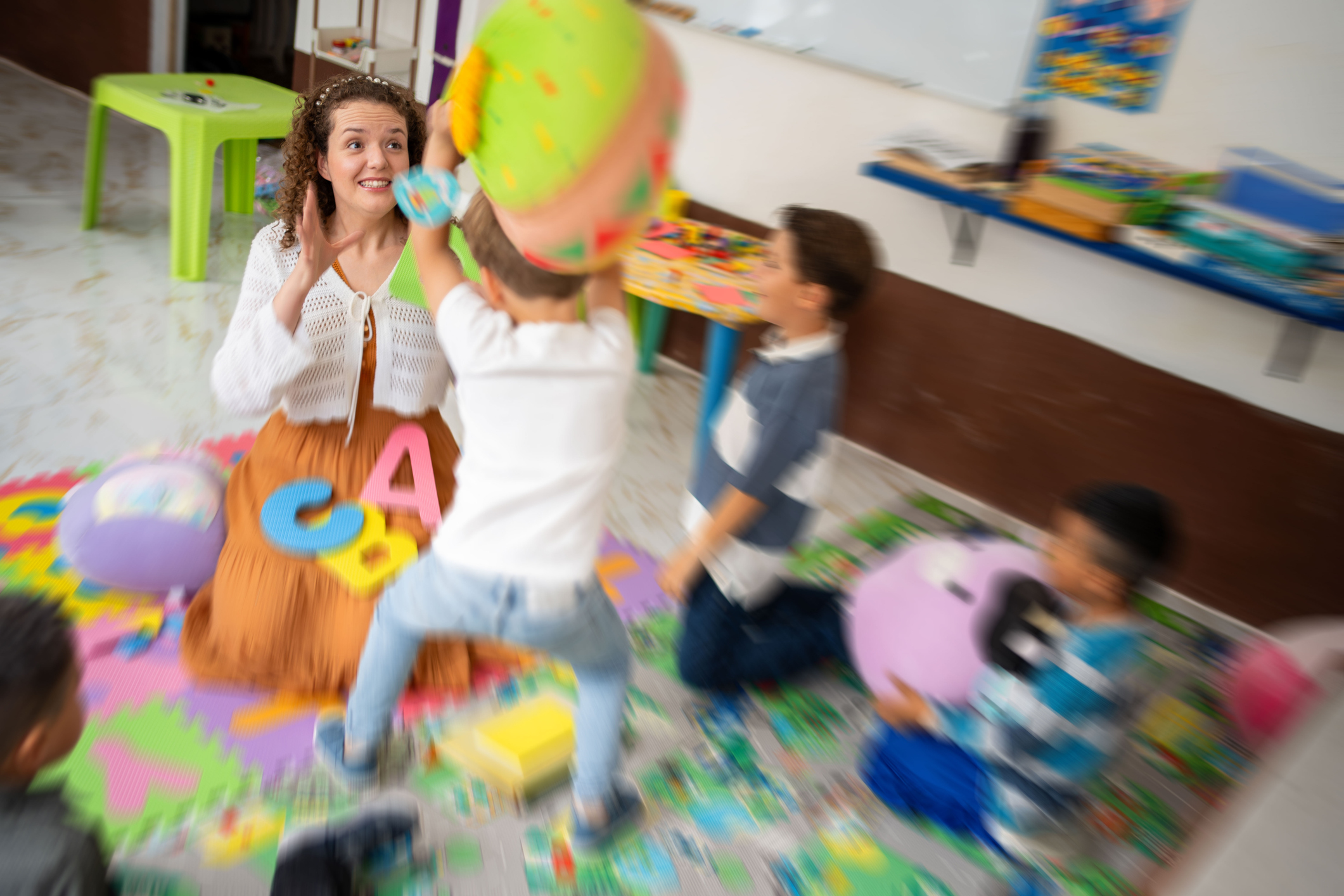
Aggression in young children can be one of the most challenging behaviors for educators and caregivers to navigate. Whether it’s hitting, biting, throwing objects, or name-calling, these moments can feel overwhelming, but they’re also opportunities for teaching and growth. The key is understanding that aggression is not always intentional, and often, it’s developmentally expected.
What Aggression Really Means
Aggression is any behavior that causes physical or emotional harm or damages property. In early childhood, it can show up in many ways:
- Hitting, kicking, biting, or scratching
- Throwing objects
- Using items to hurt others
- Destroying materials
- Teasing or name-calling
- Even self-harm
For toddlers, especially around ages 2–3, aggression is often part of exploration. A child might hit or throw simply to see what happens. At this stage, they’re learning cause and effect, not trying to hurt others.
How adults respond in these moments matters. Calm, firm guidance helps children learn limits. Harsh or retaliatory responses can unintentionally teach that aggression is acceptable.
Why Do Children Use Aggression?
Aggressive behavior is communication. When children don’t yet have the skills to express themselves, their behavior fills the gap. Here are some common reasons:
Developmental Factors
- Still learning social skills like sharing and turn-taking
- Exploring cause and effect
- Struggling with impulse control
- Learning to identify and manage strong emotions
- Lacking a sense of trust or belonging
Communication Challenges
- Limited language skills
- Difficulty expressing needs, frustration, or anger
Environmental or Experiential Factors
- Modeling behaviors they’ve seen or experienced
- Coping with stress or trauma
- Feeling frustrated by their environment
- Not knowing how to use materials appropriately
Understanding the “why” behind the behavior helps us respond more effectively.
When to Be Concerned
While some aggression is typical, certain patterns may signal a need for additional support:
- A child who seems indifferent or pleased after hurting someone
- Viewing others as objects rather than people
- Frequent, goal-oriented aggression beyond age 2
- Highly impulsive behavior without awareness of consequences
In these cases, further evaluation or mental health support may be helpful.
Preventing Aggression Before It Starts
Prevention is one of the most powerful tools we have. Thoughtful environments and intentional teaching can significantly reduce aggressive behavior.
Consider these strategies:
- Set realistic, age-appropriate expectations
- Create calm, quiet spaces for children to regroup
- Maintain predictable routines and transitions
- Limit crowding in play areas
- Teach and model emotional vocabulary
- Encourage children to express both positive and negative feelings
- Reinforce that feelings are okay, but hurting others is not
- Use books, role-play, and puppets to explore emotions and problem-solving
- Teach conflict resolution skills
When children feel safe, understood, and equipped with tools, aggression naturally decreases.
How to Respond in the Moment
When aggression happens, your response should be immediate, calm, and clear.
In the moment:
- Stay calm and move in quickly
- Check for injuries and provide comfort
- Get down to the child’s level
- Set a firm limit: “No hitting. Hitting hurts. I won’t let you hurt others, and I won’t let anyone hurt you.”
- Offer choices for what to do next
After the incident:
- Help the child reflect: “What happened?”
- Guide them to understand consequences
- Explore alternative behaviors
- Support problem-solving for next time
These moments are not just about stopping behavior – they’re about teaching new skills.
Supporting Long-Term Change
If aggression becomes a pattern, it’s important to take a more individualized approach.
Long-term strategies include:
- Observing when and why aggression occurs
- Intervening early when warning signs appear
- Teaching replacement behaviors (like using words)
- Reinforcing positive actions with specific praise
- Providing extra support for social skill development
- Setting consistent, appropriate consequences
- Collaborating with families for consistency across environments
Consistency and patience are essential. Change doesn’t happen overnight, but it does happen.
Final Thoughts
Aggression in young children isn’t something to “fix” – it’s something to understand. Behind every behavior is a skill that hasn’t developed yet or a need that hasn’t been met. When we shift from reacting to teaching, we help children build the tools they need for a lifetime of healthy relationships and emotional regulation.